
Treatments
Pigmentation & Skin Clarity
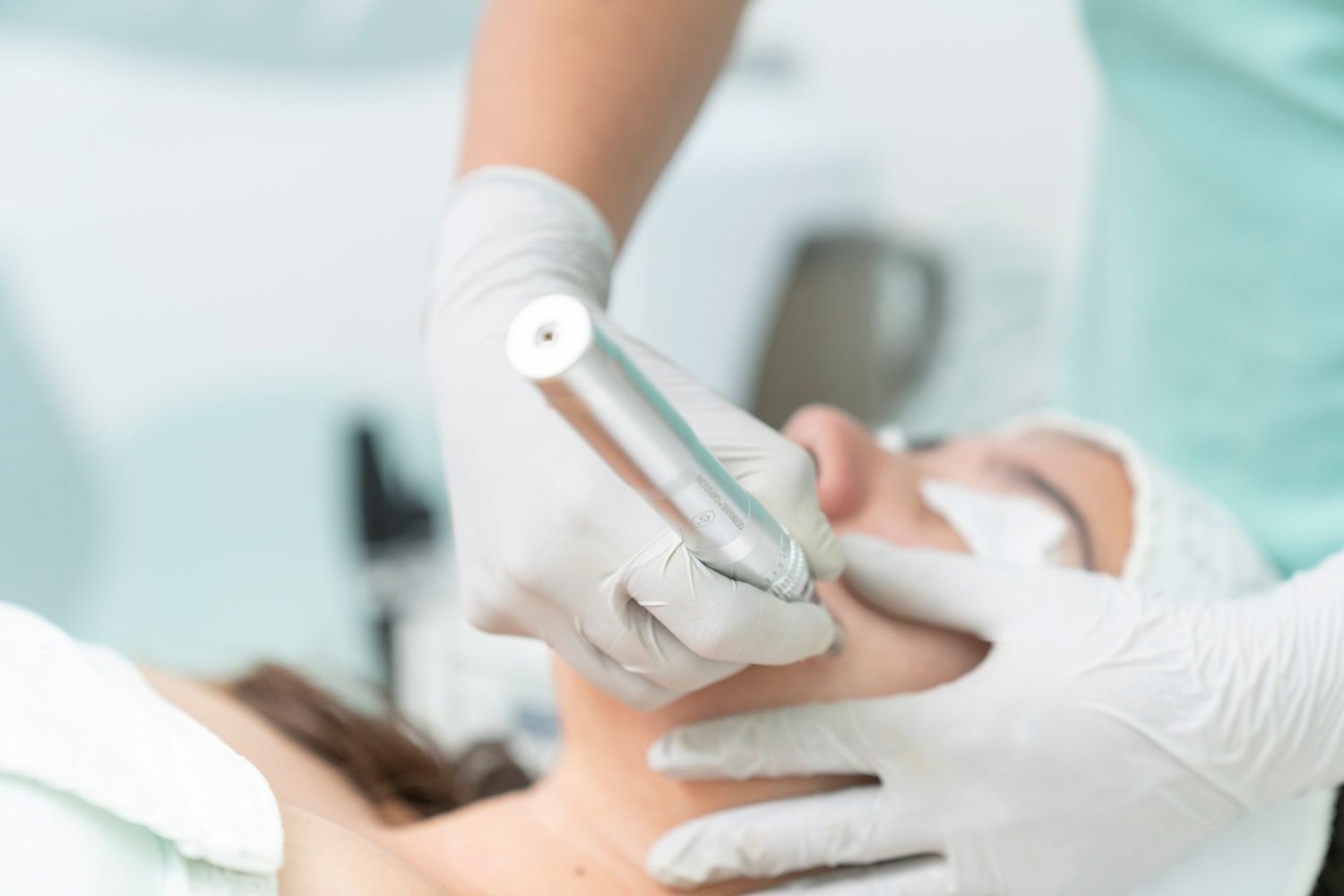
Pigmentation and skin clarity treatments use targeted laser and resurfacing to help even skin tone and reduce the appearance of pigment, sunspots, redness and broken capillaries. At our clinic in eastern Sydney we work with Pico laser (X-Lase), Erbium fractional resurfacing (sometimes searched as Fraxel-style resurfacing), the carbon peel and speciality peels. Your plan is matched to your skin at a consultation with Jade, from $120.
How we help even and clarify your skin
Uneven tone, sunspots and dullness build up over years of daily life and sun exposure. Rather than one fixed treatment, we choose the right tool for your skin and the concern in front of us.
- Pico laser (X-Lase) sends rapid pulses of light that target areas of pigment, so they gradually break down and clear as your skin renews.
- Erbium fractional resurfacing refreshes the skin's surface to soften texture and improve overall clarity.
- Carbon and speciality peels lift dull, congested surface cells to reveal brighter, smoother skin.
Each option works differently, and most people are best suited to one or a short, planned combination decided at their consultation.
Your treatment options
We keep the choices simple and let your consultation guide the plan. Prices are a starting point and depend on the area and what your skin needs.
- Pico Laser (X-Lase) for pigment, sunspots, the appearance of redness and broken capillaries, from $120.
- Erbium fractional resurfacing Resurfacing to refine texture and improve clarity, from $349.
- Carbon (Hollywood) Peel for an all-over brightening refresh, $199.
- Speciality Peels customised to your skin, from $120.
The full range of areas and session options lives in the booking calendar, so you are not left scrolling through long price lists to decide.
What to expect on the day
Your appointment starts with a look at your skin so the treatment and settings suit you. Laser and peel treatments are generally comfortable, with a warm or tingling sensation that we manage as we go.
- You may notice some warmth, pinkness or light flaking for a short while afterwards, depending on the treatment.
- Most people return to their day with little to no downtime, though deeper resurfacing needs a little more recovery time we explain beforehand.
- Sun protection between sessions is important, and we talk you through a simple aftercare routine.
Who these treatments suit
Pigmentation and skin clarity treatments are a considered option for people wanting to reduce the appearance of sun damage, uneven tone or dullness. A consultation is the clearest way to know what will suit you and how many sessions to plan for:
- People noticing sunspots, patchy tone or a loss of brightness
- Those wanting redness and broken capillaries to look less noticeable
- Clients across Paddington, Double Bay, Bondi and the wider eastern Sydney area
Results vary from person to person, and some skin types or concerns suit a different approach, which Jade assesses with you. This information is general only and shared honestly.
The medical-grade technology behind your treatment
Skin clarity comes down to the equipment and how precisely it can be controlled. At our clinic we treat pigment and resurface skin with medical-grade platforms rather than entry-level salon devices, and we match the wavelength and settings to your skin.
- Xlase Plus QSwitch by Biotech Italia. A medical-grade, TGA and FDA approved Q-switched Nd:YAG laser platform. It delivers two wavelengths, 1064nm for deeper pigment and 532nm for more superficial marks, so the treatment can be tuned to the pigment in front of us.
- Extremely short pulses. The laser fires in nanoseconds (around 9ns), targeting pigment with high peak power while sparing the surrounding skin. This is part of why it can be used across a wider range of skin types, including darker phototypes, when handled with care.
- The exclusive OptoH module. Xlase Plus uses a newly designed dual-rod resonator to produce a high-energy, stable laser beam, plus high-precision optics that spread the energy evenly, reduce scattering, and help prevent heat building up in the centre of the beam.
- Erbium:YAG fractional resurfacing. Erbium has the highest absorption in skin of all the infrared lasers, so it can ablate micron-thin layers of the surface with real precision. It is gentler than older CO2 resurfacing, tends to recover around twice as quickly, and is often a better choice for darker skin tones.
- Carbon (Hollywood) peel. A layer of activated carbon is drawn into pores and congestion, then a Q-switched 1064nm laser pass lifts it away, giving a deeper exfoliation than a standard topical peel for a brighter, smoother finish.
Individual results vary, and the right device, or a short planned combination, is decided with you at your consultation.
In our carbon laser peel, an activated carbon layer draws the 1060nm laser energy deep into the dermis, delivering an exfoliation up to 4 times deeper than a standard peel while the short-pulse Q-Switched laser lifts the carbon - and the debris - away.
The science: how pigment and resurfacing lasers work
These treatments work with your skin's own renewal process rather than against it, and understanding the mechanism is part of setting realistic expectations.
- Breaking down pigment. The laser's rapid nanosecond pulse is selectively absorbed by the pigment, breaking it into tiny fragments through a photoacoustic effect. Your body then clears those fragments naturally over the following days as the skin renews, which is why pigment fades gradually across a planned course rather than in a single visit.
- How ink clears (laser tattoo removal). The same Q-switched platform is used for laser tattoo removal, choosing 1064nm or 532nm according to the ink colour. Once the ink is fragmented, the particles undergo phagocytosis by macrophages, the cells that clear foreign material, and leave the body through the lymphatic system.
- Resurfacing with Erbium. Erbium light is strongly absorbed by the water in your skin, so it removes very thin layers of the surface in a controlled way. This prompts fresh, more even skin to form and helps soften texture and improve overall clarity.
- The carbon peel effect. The activated carbon binds to oil and debris in the pores, and the laser targets the carbon to lift away dull surface cells. The gentle warmth also encourages collagen renewal and helps refine the look of pores.
How well and how quickly skin responds differs from person to person, so we keep every plan honest and matched to your skin,.
Pricing by area
Priced by the area or option you choose. Select below to see the price - your full plan is confirmed with Jade at consultation, and do ask about current offers.
Prices from our current booking menu, confirmed at consultation.
Frequently asked
What can Pico laser (X-Lase) help with?
Pico laser targets areas of pigment, sunspots and the appearance of redness and broken capillaries, helping the skin look clearer and more even over a planned course. How your skin responds varies from person to person, so we set a realistic plan at your consultation rather than promise a fixed result.
Is there any downtime?
Most Pico laser, carbon peel and speciality peel treatments have little to no downtime, with some warmth, pinkness or light flaking that settles quickly. Erbium fractional resurfacing is deeper and needs a little more recovery, which we explain fully before you book so there are no surprises.
How many sessions might I need?
It depends on the concern, your skin and the treatment we choose. Pigmentation and clarity usually improve gradually over a short, planned series of sessions rather than a single visit. Jade suggests a realistic plan at your consultation and adjusts it as your skin responds.
How do I book at Skin Body Health?
We work carefully for these treatments, so request your skin consultation online or call us on 0410 783 125. You can also email info@skinbodyhealthclinic.com. Jade then reviews your skin and tailors a clear, simple plan for the concern you want to address.
What happens to the pigment after a Pico laser session?
Straight after treatment the pigment may look a little frosted or darker for a day or two, then it gradually flakes away as your skin renews over the following days. It is normal for spots to look more obvious before they lift. We talk you through simple aftercare, and how your skin responds varies from person to person.
Can these treatments be used on darker skin tones?
Often, yes. The Q-switched Nd:YAG and Erbium lasers we use are suited to a wide range of skin types, and Erbium is generally gentler on darker skin than older CO2 resurfacing. Every skin is different, so Jade assesses your skin type and does a patch test before recommending the right settings and treatment for you.
How should I prepare for a laser or resurfacing treatment?
For laser and resurfacing we usually do a patch test at least a week beforehand, ask you to pause retinol for around five days before, and to avoid direct sun for about four weeks before and after. Good sun protection between sessions matters. We give you a simple written aftercare routine so there are no surprises.
Is there anyone who should avoid these treatments?
Some situations mean we would delay treatment or choose a different approach, including pregnancy, a pacemaker or heart condition, epilepsy, an active skin infection in the area, or if you are taking blood-thinning medication. This is exactly what the consultation is for, so we can check your history and keep your treatment safe and suitable.
Does the carbon peel lighten or bleach my skin?
No. The carbon peel does not bleach or lighten your natural skin tone. It lifts away dull surface cells and draws out congestion, so the complexion looks brighter and clearer rather than bleached. It is a refreshing, low-downtime treatment that suits most skin types, assessed with you first.
In this group